For product brands, system integrators, and automation solution providers, choosing a wall-mounted touch panel is rarely only about screen size. The more important question is often: which hardware platform direction can support the required software, installation method, connectivity, and long-term product roadmap?
Smatek provides standard wall-mounted touch panel platforms that can be used as a starting point for different smart home, hotel, apartment, and building automation projects. These platforms are not positioned as fixed end products only. Instead, they are designed to support different development directions, including Android applications, Linux-based interfaces, KNX control, Tuya / Smart Life integration, and OEM/ODM customization.
This article gives a practical overview of the main Smatek platform directions and how customers can evaluate which one is more suitable for their project.
Why Platform Direction Matters
A wall-mounted control panel is often part of a larger product or system architecture. It may need to run a customer-developed app, connect with a building automation system, support local room control, match a specific installation box, or integrate with an existing smart home ecosystem.
Before choosing a model, product teams usually need to clarify several project-level questions:
- Will the panel run an Android app, a Linux interface, or a customer-developed system?
- Is the project based on Ethernet, PoE, Wi-Fi, KNX TP, RS485, Zigbee, or another integration method?
- Does the panel need AC power, PoE, DC input, or a project-specific power design?
- Will the customer use Smatek’s standard housing, or is a customized mechanical structure required?
- Is the product intended for residential, hotel, commercial, apartment, or OEM brand applications?
The answers to these questions usually determine the platform direction before the exact model is selected.
Android / Linux Touch Panel Platforms
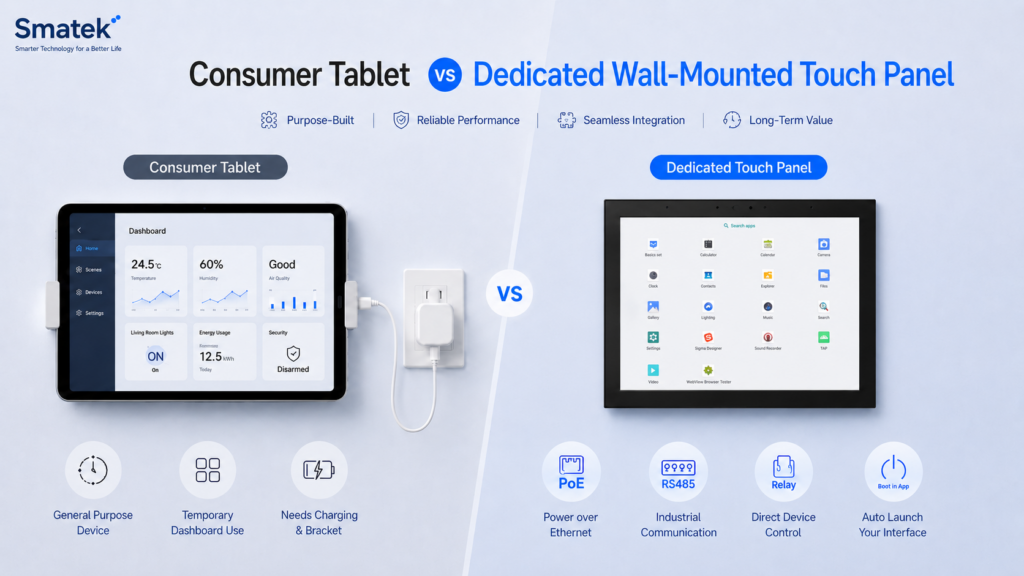
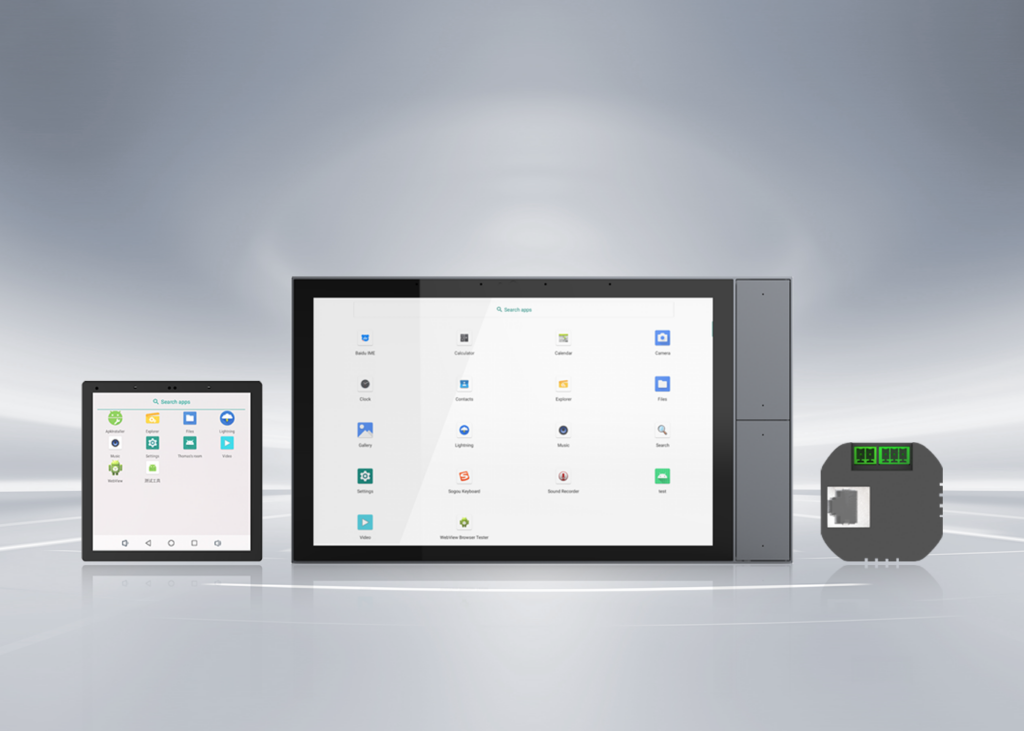
Smatek’s Android and Linux touch panel platforms are suitable for customers who need an open wall-mounted hardware base for their own software, UI, or ecosystem logic.
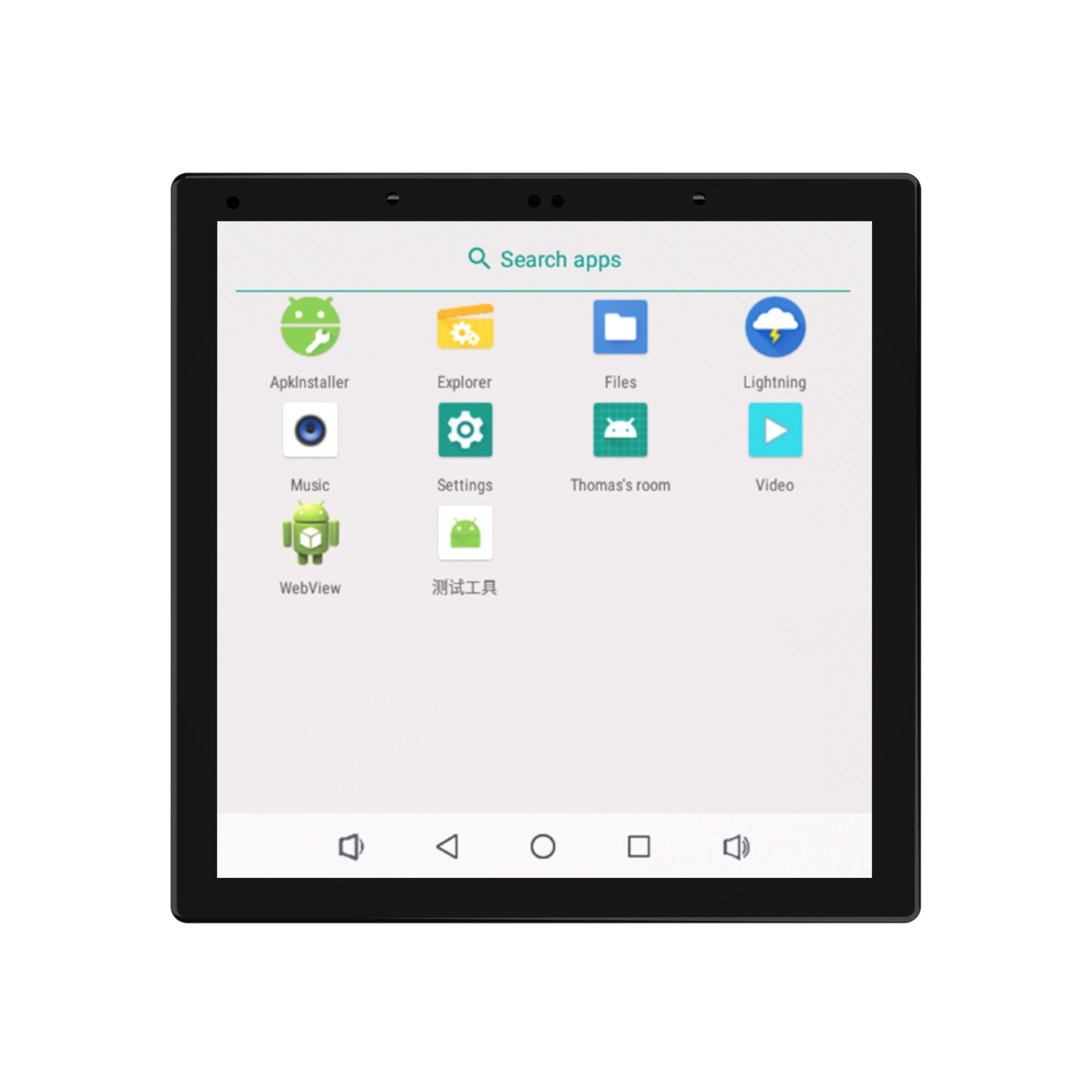
Android-based platforms are commonly used when customers want to deploy APKs, run a rich graphical interface, integrate third-party applications, or build a familiar app-based control experience. For many smart home and building automation brands, Android provides a flexible environment for interface development, local control, and cloud-connected applications.
Linux-based platforms are often considered when customers prefer a more controlled system environment, a dedicated interface, a lightweight application layer, or a customized software stack. Linux can be suitable for projects where the customer wants to control the runtime environment more closely or build a more embedded product experience.
Depending on the project, Smatek can support different screen sizes, power options, mechanical structures, interface configurations, and software preparation requirements. Standard Android / Linux platforms can also be used as a starting point for further customization.
KNX Touch Panel Directions
For KNX building automation projects, Smatek supports two main directions.
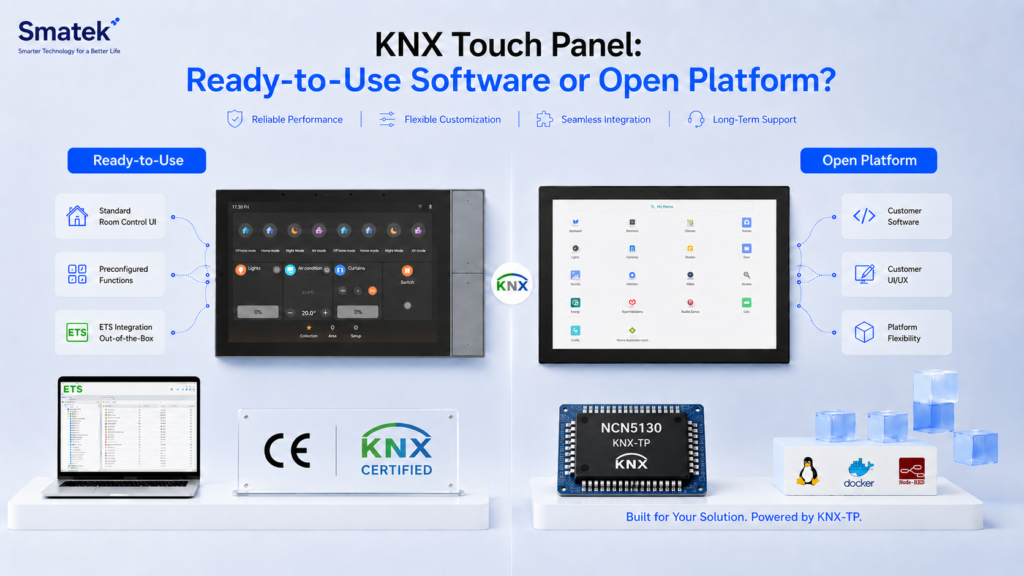
The first direction is a ready-to-use KNX touch panel with Smatek KNX software and ETS configuration files. This direction is suitable for customers who want a standard KNX wall-mounted interface for common room-control functions without developing the full software layer from scratch.
The second direction is a KNX-TP open platform. This is more suitable for customers who already have their own KNX software, control logic, or product ecosystem. In this case, Smatek provides the hardware platform and KNX TP communication base, while the customer keeps control over the software, UI, and system logic.
This distinction is important because different customers have different development models. Some need a finished KNX interface. Others need a hardware platform that can support their own KNX application or stack.
Tuya / Smart Life Panel Options
For projects based on the Tuya or Smart Life ecosystem, Smatek also provides wall-mounted touch panel options with Tuya-related smart control directions.
These panels can be used for smart home control scenarios where customers need a wall-mounted interface connected to standard Tuya Wi-Fi or Zigbee devices. In selected configurations, the panel can also support a built-in Tuya Zigbee gateway direction, allowing it to act as a control point for compatible smart devices.
This direction is more suitable for customers who want to work within an existing smart home ecosystem rather than developing a completely independent platform from the ground up.
OEM/ODM Customization Possibilities
In many projects, a standard platform is only the starting point. Product brands may require changes to the enclosure, power input, mounting method, interface layout, wireless module, logo, color, firmware, or certification direction.
Smatek can support OEM/ODM customization around the hardware platform according to project requirements. Typical customization discussions may include:
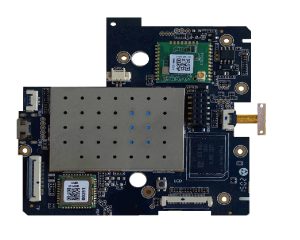
- Mainboard architecture and processor direction
- Power design such as PoE, DC, or AC input
- Interface configuration such as Ethernet, RS485, relay, dry contact, or security-related interfaces
- Wireless module options such as Wi-Fi, Bluetooth, Zigbee, RF, or other project-specific modules
- Housing design, material, color, surface finish, and logo
- Wall-box compatibility and mounting structure
- System image, boot behavior, APK pre-installation, or firmware preparation
- Packaging, labeling, and certification support
The customization scope depends on the project quantity, development schedule, technical requirements, and whether the customer needs a small adaptation or a full platform-level customization.
How to Choose the Right Direction
There is no single platform direction that fits every project. A product team should usually start from the application and system architecture rather than only comparing specifications.
For example, if the customer already has an Android application, an Android touch panel platform may be the most practical starting point. If the project requires a dedicated embedded interface, Linux may be more suitable. If the project is based on KNX building automation, the choice depends on whether the customer needs ready-to-use software or an open KNX-TP platform. If the project is based on Tuya or Smart Life, a Tuya-compatible panel direction may be more efficient.
For OEM/ODM projects, the decision often depends on whether the standard platform can meet most requirements, or whether deeper changes are needed in mechanical design, mainboard layout, power architecture, and system integration.
How Smatek Supports Platform-Based Projects
Smatek’s role is to provide wall-mounted touch panel hardware platforms and support customers in selecting or adapting the right direction for their product.
For customers with their own software, UI, app, or ecosystem logic, Smatek can provide the hardware platform, operating system base, interface support, and customization path. This allows the customer to focus on product experience and system integration while using a stable hardware foundation.
For customers who need more complete product directions, Smatek can also support standard platform options such as Android / Linux panels, KNX panels, Tuya / Smart Life panels, and selected OEM/ODM hardware development.
The goal is not simply to offer one fixed product, but to help customers identify the most practical platform direction for their own project.
FAQ
What is a touch panel hardware platform?
A touch panel hardware platform is a hardware base that can support different software, UI, interface, power, and installation requirements. It is not limited to one fixed end product and can often be adapted for customer-specific projects.
Can Smatek support customer-developed software?
Yes. Smatek can provide Android or Linux-based wall-mounted touch panel platforms for customers who develop their own application, UI, ecosystem logic, or control software.
What is the difference between ready-to-use KNX panels and KNX-TP open platforms?
A ready-to-use KNX panel includes Smatek KNX software and ETS configuration files. A KNX-TP open platform is intended for customers who want to develop or integrate their own KNX software, UI, or control logic.
Can Smatek customize a standard touch panel platform?
Yes. Depending on the project scope and quantity, Smatek can support customization of hardware architecture, power design, interfaces, wireless modules, housing, installation structure, branding, firmware, and certification direction.
Which platform direction should a customer choose first?
The best starting point depends on the customer’s software environment, system architecture, installation method, connectivity requirements, and product roadmap. Smatek can help evaluate whether a standard platform or a customized direction is more suitable.