For many smart home brands, system integrators, and building automation product teams, the first customization question is often simple: “Can this touch panel be adapted for our project?”
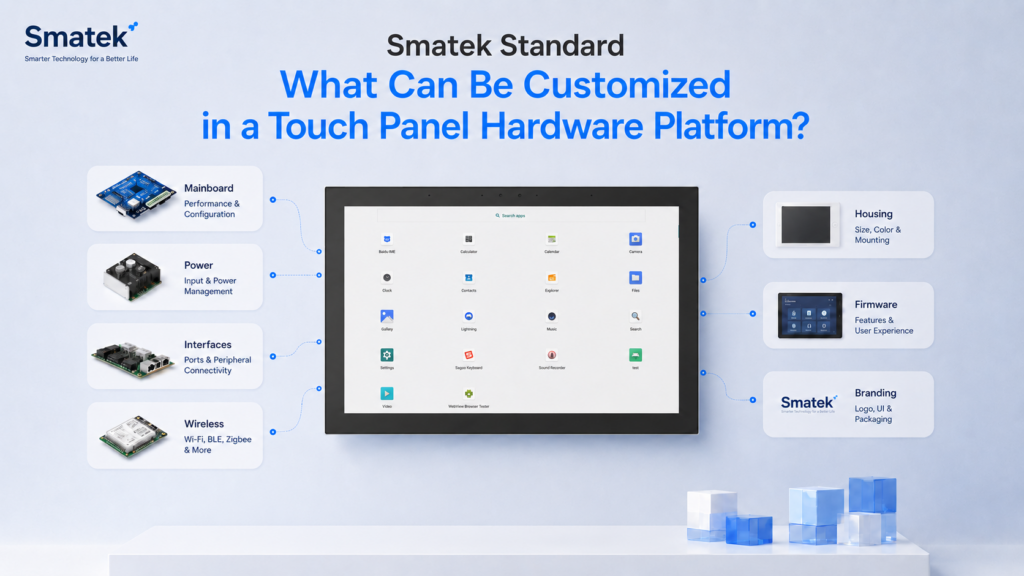
In practice, customization is not only about adding a logo or changing the housing color. A wall-mounted touch panel can involve several layers of customization, including mainboard architecture, power design, interfaces, wireless modules, mechanical structure, installation method, firmware preparation, branding, and certification support.
This article gives a practical overview of what can usually be customized in a touch panel hardware platform and how product teams can evaluate the customization scope before starting a project.
Customization Usually Starts from a Platform
A customized touch panel project does not always need to start from a completely new design. In many cases, a standard hardware platform can be used as the starting point, and the project can be adapted around the customer’s software, installation environment, interface requirements, and product direction.
This approach can reduce development risk compared with building everything from zero. It also allows the customer to evaluate an existing hardware base before deciding whether deeper customization is necessary.
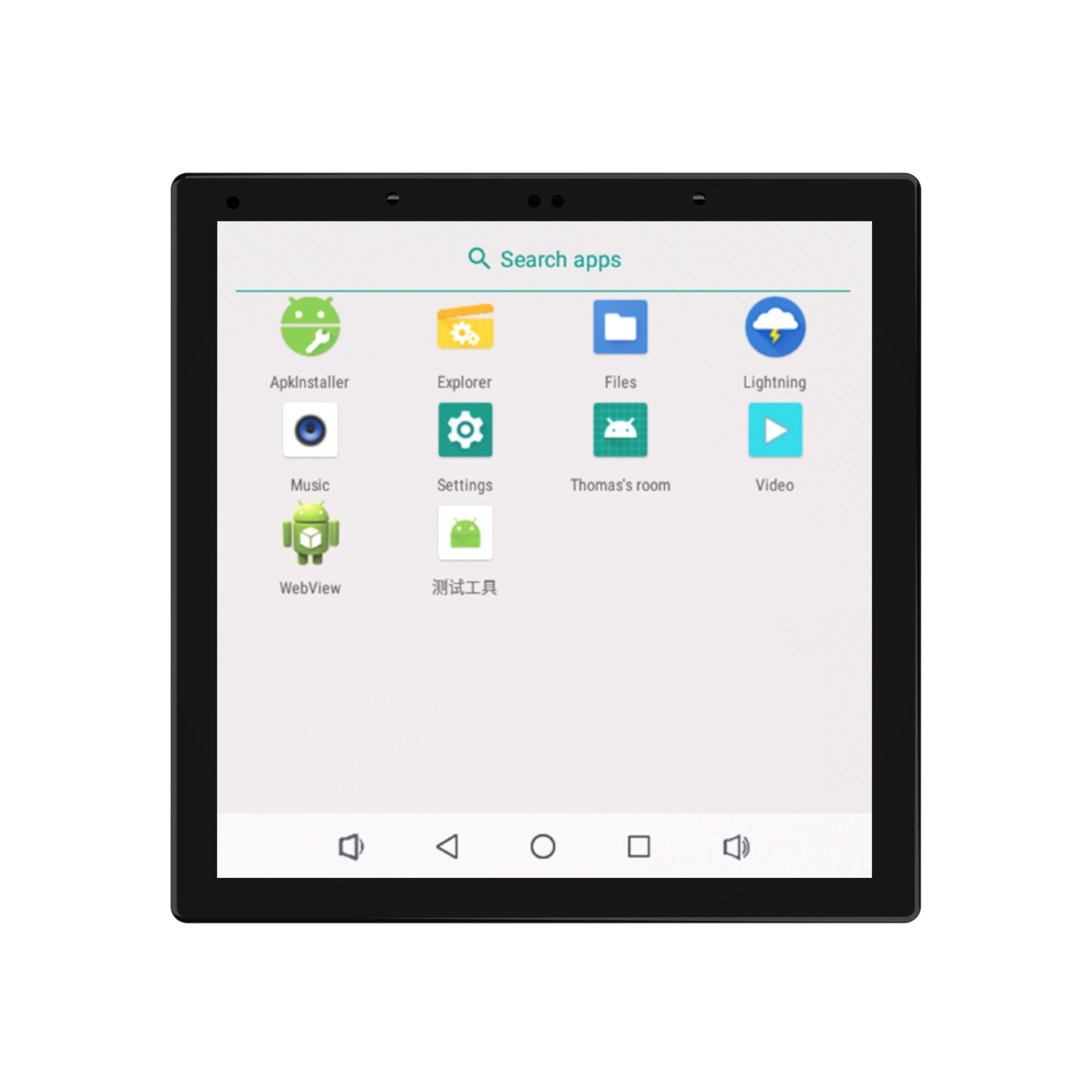
For example, a project may start from a standard Android or Linux touch panel platform, then adjust the power input, interface layout, wireless module, housing color, logo, firmware image, or mounting structure according to the final product requirement.
The key is to define which parts need to remain standard and which parts need to be adapted.
Mainboard and Processor Direction
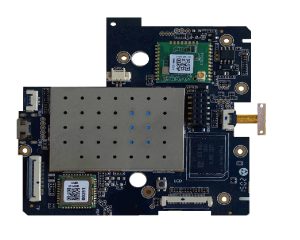
The mainboard is one of the most important parts of a touch panel hardware platform. It affects performance, system compatibility, interface layout, power design, cost, and long-term product availability.
Depending on the project, mainboard-level customization may involve:
- Processor platform selection
- RAM and storage configuration
- Interface layout adjustment
- Wireless module position
- Power input design
- Sensor, audio, relay, or expansion interface support
- Long-term supply and production planning
For some projects, a standard mainboard configuration is enough. For others, especially when the customer has specific system, interface, or cost requirements, the mainboard may need to be adapted or redesigned.
This level of customization usually requires a clear project scope, expected quantity, development schedule, and technical requirement list.
Power Architecture
Power design is another common customization area for wall-mounted touch panels.
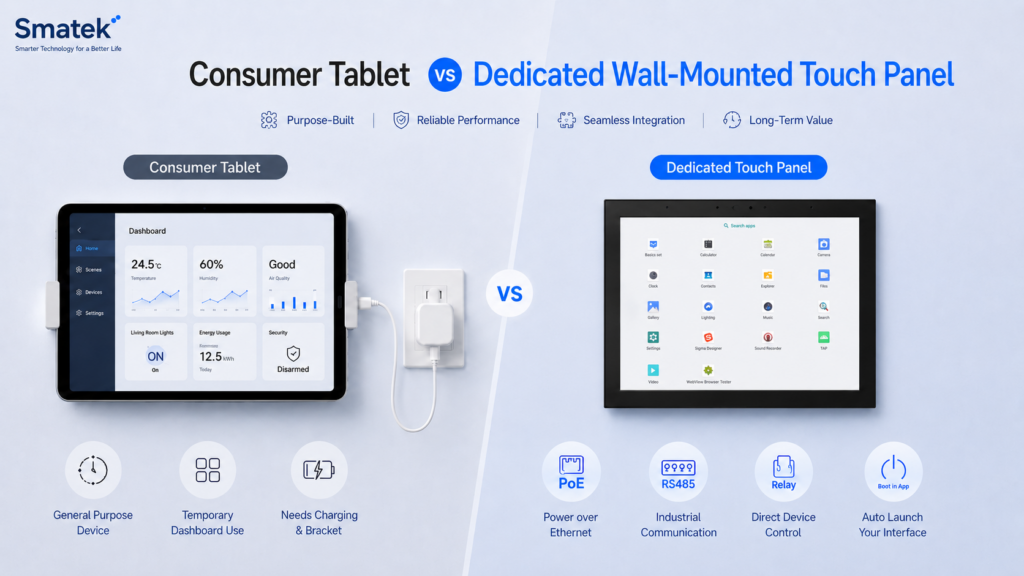
Different projects may require different power architectures, such as PoE, DC input, AC input, or a dedicated power base. The right direction depends on the installation environment, wall-box design, wiring condition, relay requirement, safety consideration, and certification target.
Typical power-related discussions may include:
- PoE or Ethernet-based power direction
- DC low-voltage input
- AC 110–230V power input
- Power base design
- Relay or dry contact support
- Thermal design and safety spacing
- Installation box compatibility
- Regional certification requirements
For new building projects, PoE or DC-powered panels may be preferred because they can align with structured cabling or low-voltage systems. For retrofit projects or local wall-switch replacement scenarios, AC-powered directions may be considered depending on the installation conditions.
Power architecture should be confirmed early, because it can affect the mainboard, enclosure, certification, installation method, and production design.
Interfaces and Connectivity
Interface configuration is often one of the most project-specific parts of a touch panel platform.
A standard wall-mounted panel may already include common interfaces such as Ethernet, Wi-Fi, Bluetooth, USB, or RS485. However, customer projects may require different interface combinations depending on the system architecture.
Common interface customization topics include:
- RJ45 Ethernet
- PoE support
- RS485
- Relay output
- Dry contact input or output
- Security-related interfaces
- USB or debug ports
- GPIO or expansion interfaces
- Audio input/output
- Sensor interfaces
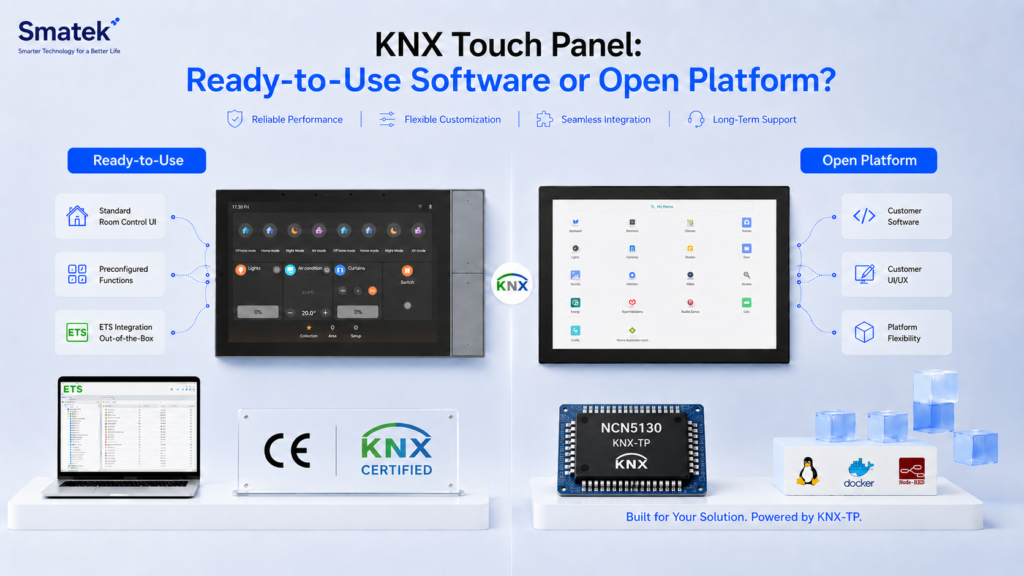
For example, a hotel control project may care more about RS485, relay, and local room-control interfaces. A smart home ecosystem brand may focus more on Ethernet, Wi-Fi, Bluetooth, Zigbee, or app deployment. A building automation customer may need KNX TP, RS485, or other system integration interfaces.
The interface direction should be matched with the customer’s software, installation environment, and control logic.
Wireless Module Options
Wireless modules are another area where customization may be required.
Depending on the project direction, a wall-mounted touch panel may need to support different wireless technologies, such as:
- Wi-Fi
- Bluetooth
- Zigbee
- RF
- Z-Wave
- 868MHz or other regional wireless modules
- Customer-specified wireless modules
In some projects, the wireless module is only used for network connection or device pairing. In other projects, the panel may act as a local control point, gateway, or part of a larger smart home ecosystem.
Before confirming the wireless direction, product teams should clarify whether the module is only required at the hardware level or whether additional software, driver, certification, antenna, or enclosure design work is also needed.
Housing and Mechanical Design
Mechanical design is often what users see first, but it is also closely connected to engineering feasibility.
A touch panel housing can be customized in different ways depending on the product positioning and installation requirements. Typical mechanical customization discussions include:
- Screen size and product dimensions
- Plastic, metal, glass, or mixed-material housing
- Housing color and surface finish
- Logo position
- Wall-box compatibility
- Surface-mounted or recessed installation
- Bracket or mounting structure
- Back cover structure
- Button, knob, sensor, microphone, or speaker opening
- Heat dissipation and internal spacing
Mechanical customization should not be evaluated only from the appearance side. It also affects tooling cost, development time, production process, material selection, assembly, certification, and long-term reliability.
For this reason, small mechanical changes may be simple, while deeper enclosure or mounting-structure changes may require more detailed project evaluation.
Branding and Appearance
Branding customization is usually lighter than hardware or mechanical customization, but it is still important for product brands.
Common branding options may include:
- Logo printing or laser marking
- Housing color adjustment
- UI boot logo
- Startup animation
- Packaging design
- Product label
- Model naming
- User manual or documentation branding
For product brands that already have their own ecosystem or sales channel, branding customization can help the touch panel match the rest of their product portfolio.
However, branding should be discussed together with production quantity, material selection, and surface treatment, because different branding methods may require different processes.
Firmware and System Preparation
For customers who develop their own software or interface, firmware preparation can be an important part of the platform delivery.
Depending on the project, Smatek can support different software preparation directions, such as Android-based platforms, Linux-based platforms, APK pre-installation, system configuration, interface documentation, and production firmware preparation.
Firmware-related discussions may include:
- Android or Linux system direction
- APK pre-installation
- Boot behavior
- Default launcher or application startup
- System image preparation
- Driver support
- Interface documentation
- OTA or update method
- Production firmware flashing
- Customer-specific configuration
For many OEM/ODM projects, the customer keeps control of the application, UI, cloud service, ecosystem logic, and user experience, while Smatek supports the hardware platform, base system, and production preparation.
This separation can be useful for customers who want to build their own product identity without developing the complete hardware platform from scratch.
Certification and Production Support
Certification requirements should also be considered during platform selection and customization.
Depending on the target market and product configuration, certification discussions may involve CE, FCC, RoHS, REACH, KNX certification, or other regional requirements. Different power architectures, wireless modules, enclosure materials, and interface configurations may affect the certification path.
In some projects, the customer may handle final certification directly. In other cases, Smatek can support the process through documentation, test preparation, sample support, or certification agency coordination depending on the project arrangement.
Production support may also include:
- Sample preparation
- Pilot run
- Firmware flashing
- Product labeling
- Packaging
- Quality control requirements
- Batch production planning
For customized projects, it is usually better to discuss certification and production requirements early, rather than after the hardware direction has already been fixed.
How to Evaluate the Customization Scope
Not every project needs deep customization. Some customers can start with a standard touch panel platform and only adjust software deployment, logo, or packaging. Other customers may require deeper changes to power design, mainboard architecture, interfaces, housing, or installation structure.
A practical way to evaluate the customization scope is to separate requirements into three levels:
- Standard platform requirements: features already available in an existing Smatek platform
- Minor customization requirements: changes such as logo, color, firmware configuration, or selected interface options
- Platform-level customization requirements: changes involving mainboard, housing, power architecture, installation structure, or project-specific hardware design
This helps both sides understand the development workload, cost, schedule, and risk level.
Before starting a customized project, customers should prepare as much information as possible about their application, software environment, installation method, interface requirements, target market, expected quantity, and certification needs.
How Smatek Supports OEM/ODM Touch Panel Projects
Smatek supports customers as a wall-mounted touch panel hardware platform partner.
For customers with their own software, UI, app, or ecosystem logic, Smatek can provide the hardware platform, base system, interface support, and customization path. This allows customers to focus on the product experience and system integration while using a stable hardware foundation.
For projects that require deeper customization, Smatek can help evaluate the feasibility of changes to the mainboard, power design, interface layout, wireless module, housing, installation structure, firmware preparation, and production process.
The goal is not only to provide a standard touch panel model, but to help customers identify the most practical hardware platform direction for their own product.
After defining the required customization scope, customers can further review Smatek’s Android / Linux, KNX, Tuya / Smart Life, and OEM/ODM solution pages for more detailed platform options.